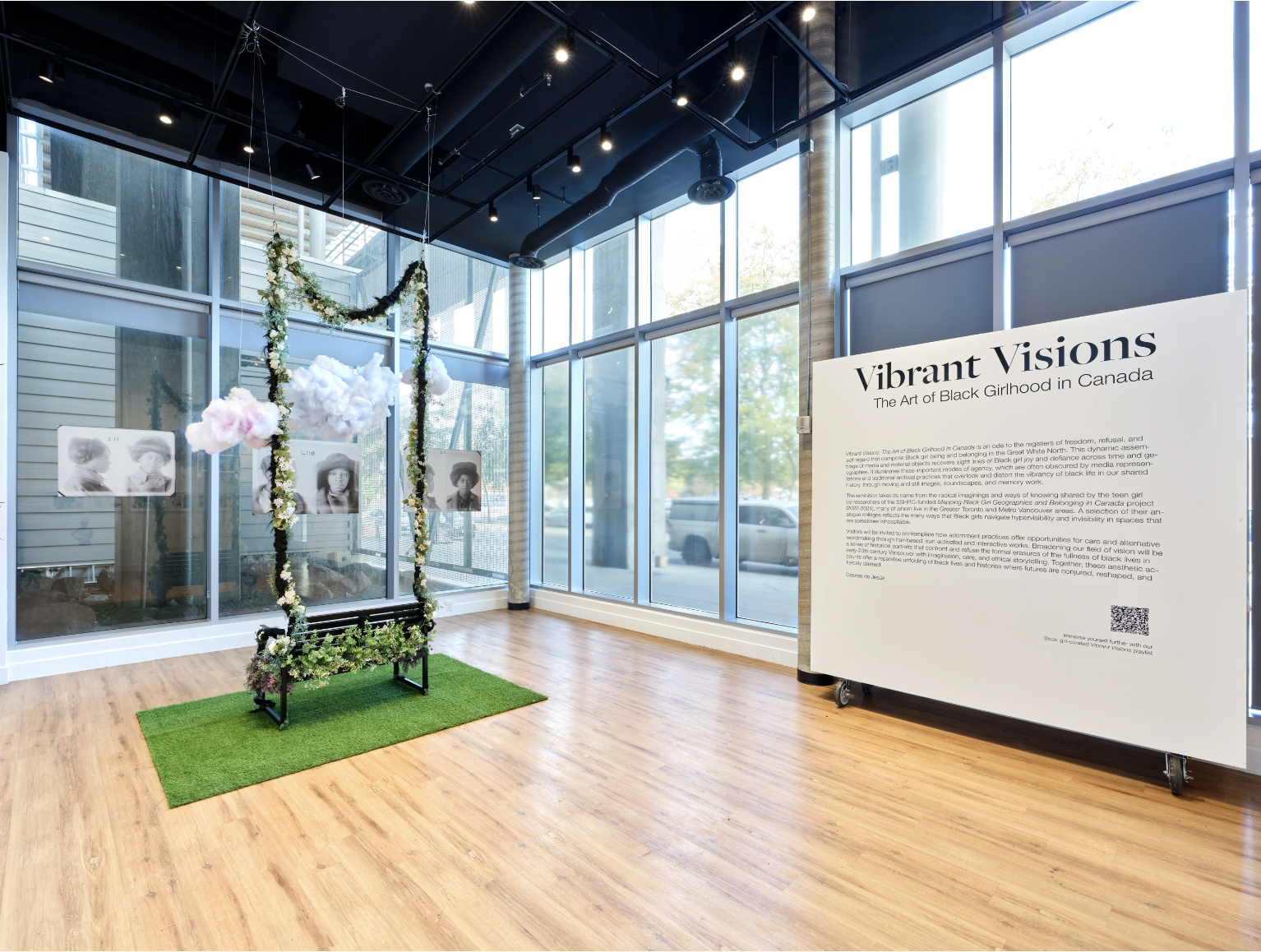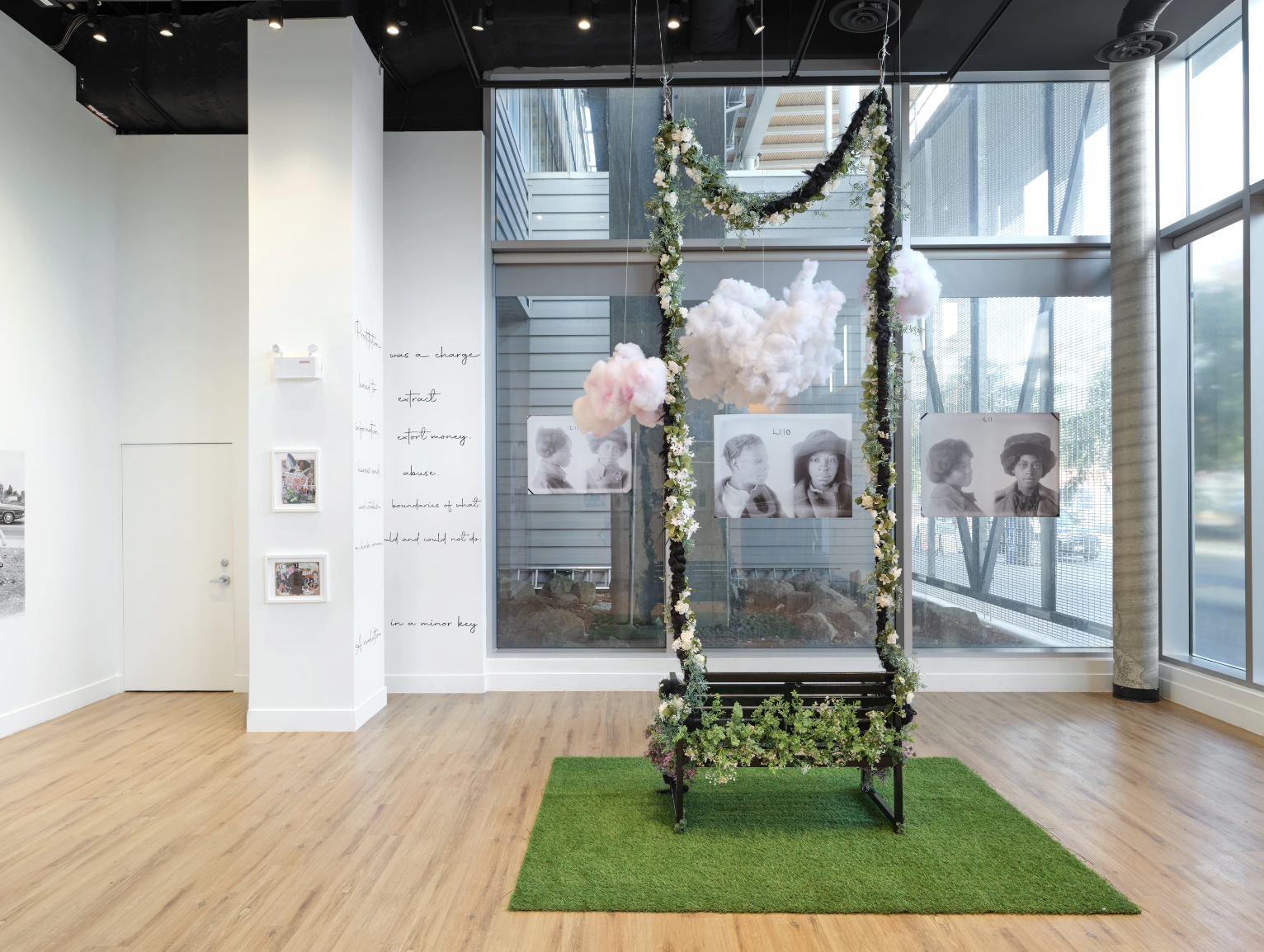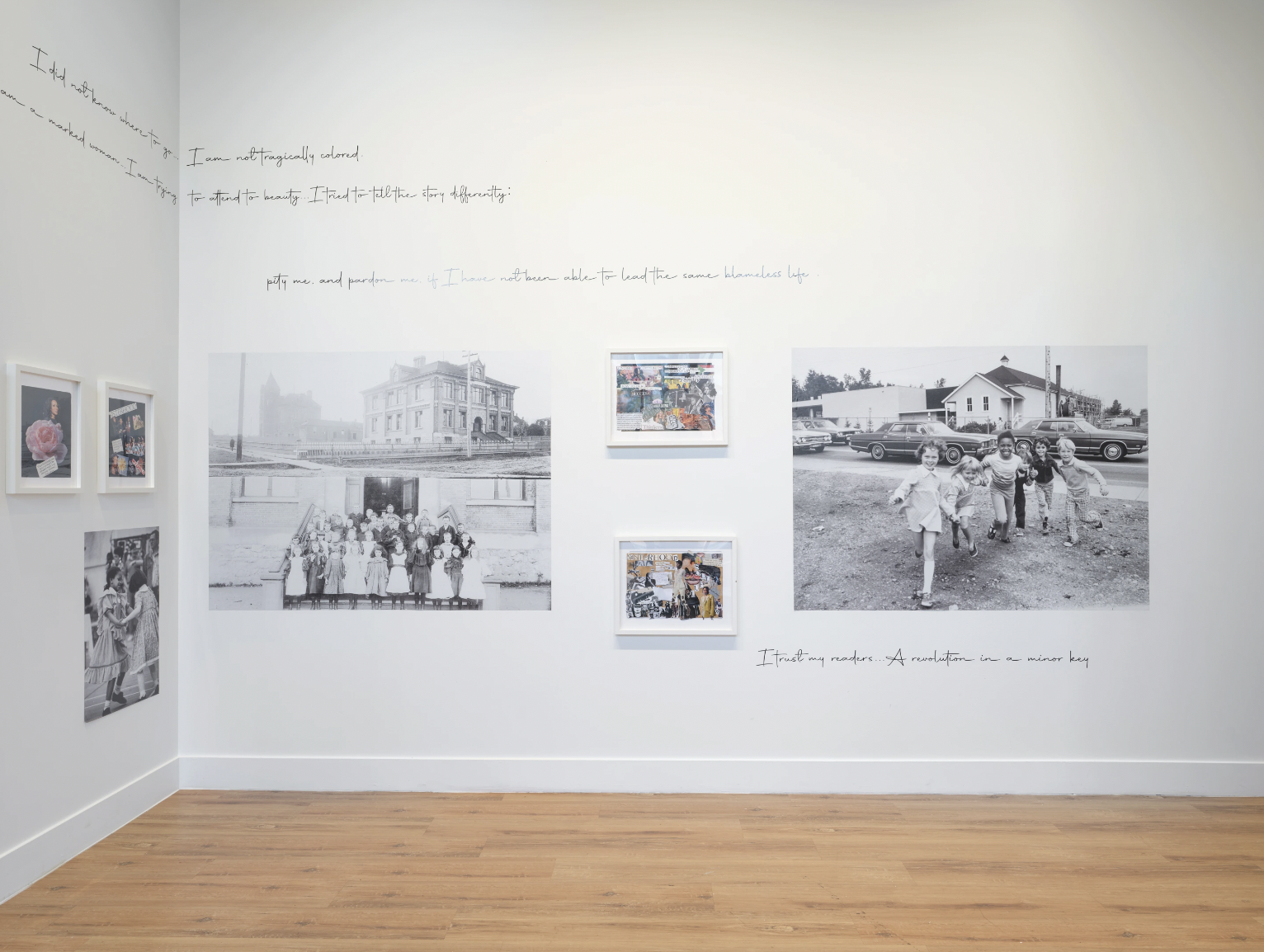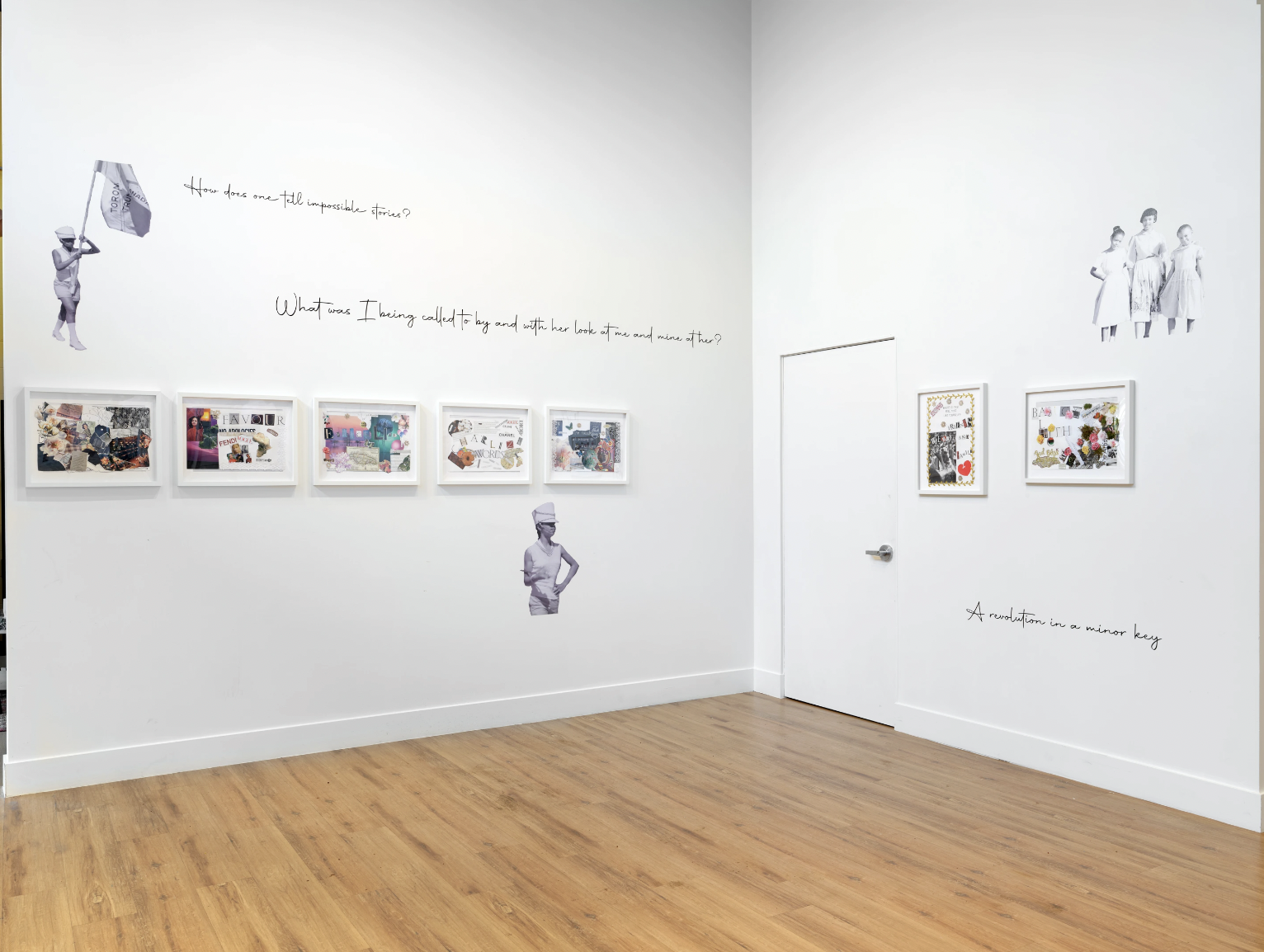

In 2025, cut-and-paste collages by the teen girl co-researchers of the SSHRC-funded Mapping Black Girl Geographies and Belonging in Canada project were showcased in two iterations of the Vibrant Visions: The Art of Black Girlhood in Canada exhibition.
The Greater Toronto iteration was co-curated by Desirée de Jesús, Nala Haileselassie, and Kisha McPherson, and held at the TIFF Lightbox.
The Metro Vancouver iteration was curated by Desirée de Jesús and held at The Black Arts Centre.
Here is a selection of collages from the collection.

I definitely think that black girlhood is centred more around being the strong black woman in the room rather than being the girl who deserves support and love.
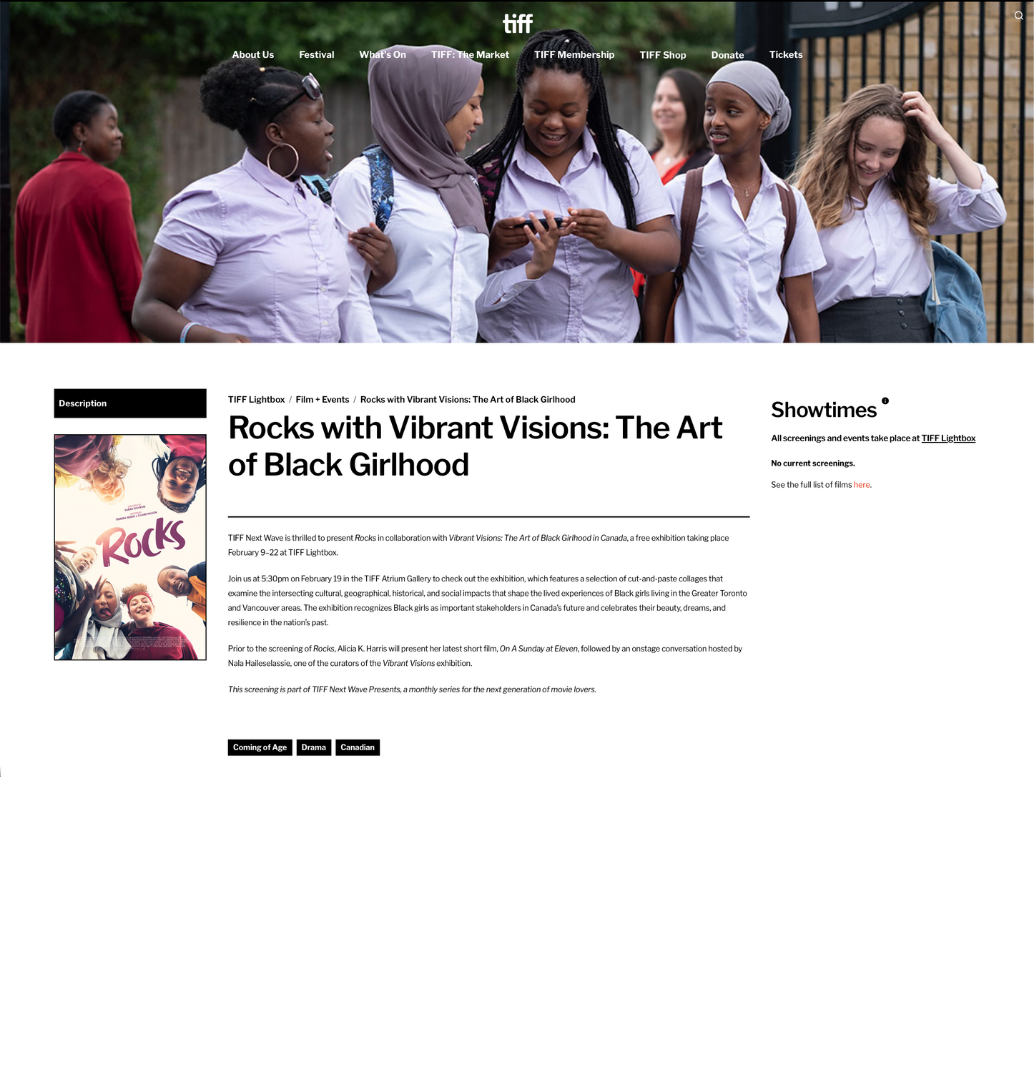
Exhibition Sites
02/ 2025
TIFF Lightbox, TIFF Lightbox Atrium Gallery, Toronto, ON.
07 - 11/ 2025
Archives of Ontario
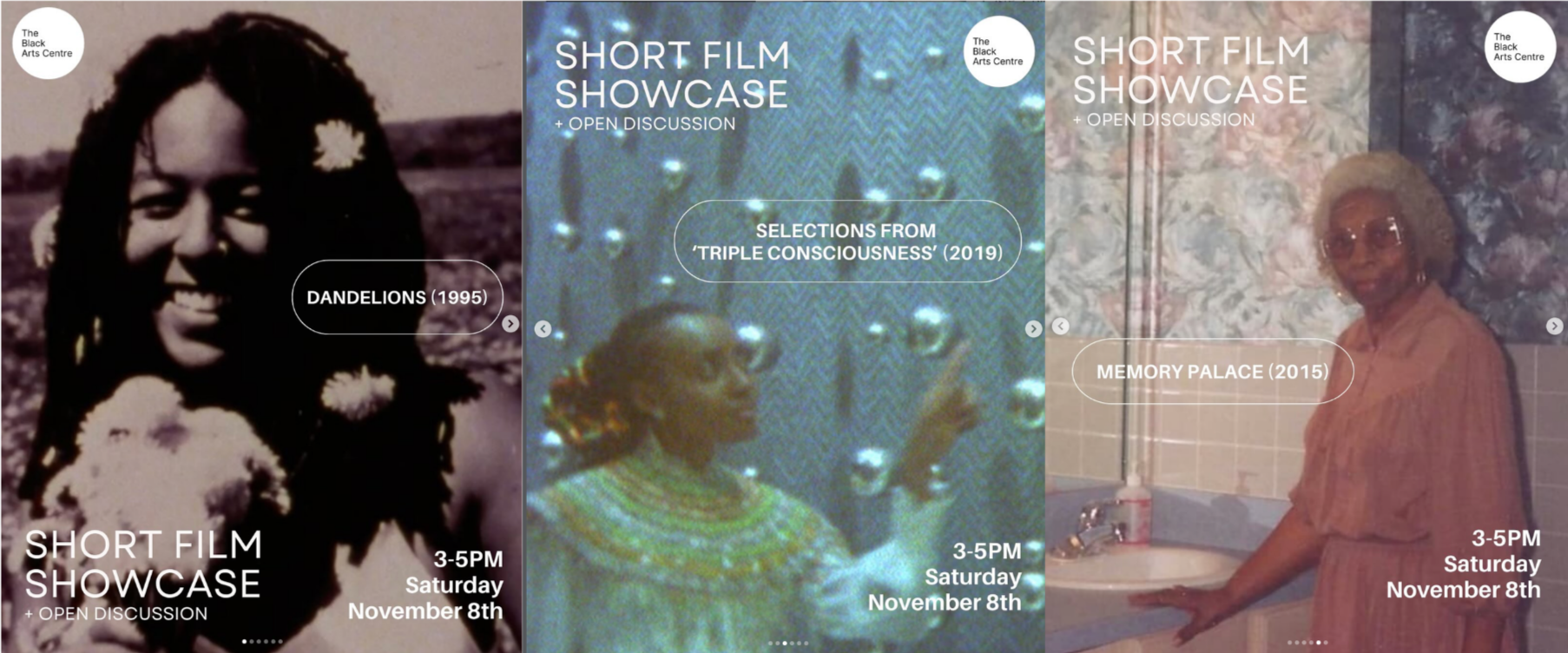
The Black Arts Centre, Surrey, BC.
02/ 2026 - 03/ 2028
“Illuminate Black: Shining Light on the Black Presence in Ontario”
Ongoing
Film Programmes
Vibrant Visions co-presented a special film screening of On a Sunday at Eleven (Alicia K. Harris, 2024) and Rocks (Sarah Gavron, 2019) with TIFF Next Wave.
Co-curator Nala Haileselassie hosted an onstage conversation with filmmaker Alicia K. Harris and choreographer Zoë Edwards.

Dept. of Communication and Media Studies (Keele campus, York University) Toronto, ON.
TIFF Next Wave | 02/2025
The Black Arts Centre | 11/2025
Vibrant Visions partnered with The Black Arts Centre to present a selection of short films curated by Vanessa Fajemisin(BAC).
Special Events
The Black Arts Centre | 10/2025
In collaboration with The Black Arts Centre, Vibrant Visions hosted a Soundscape/Sound Design workshop with artist Della Orrey.

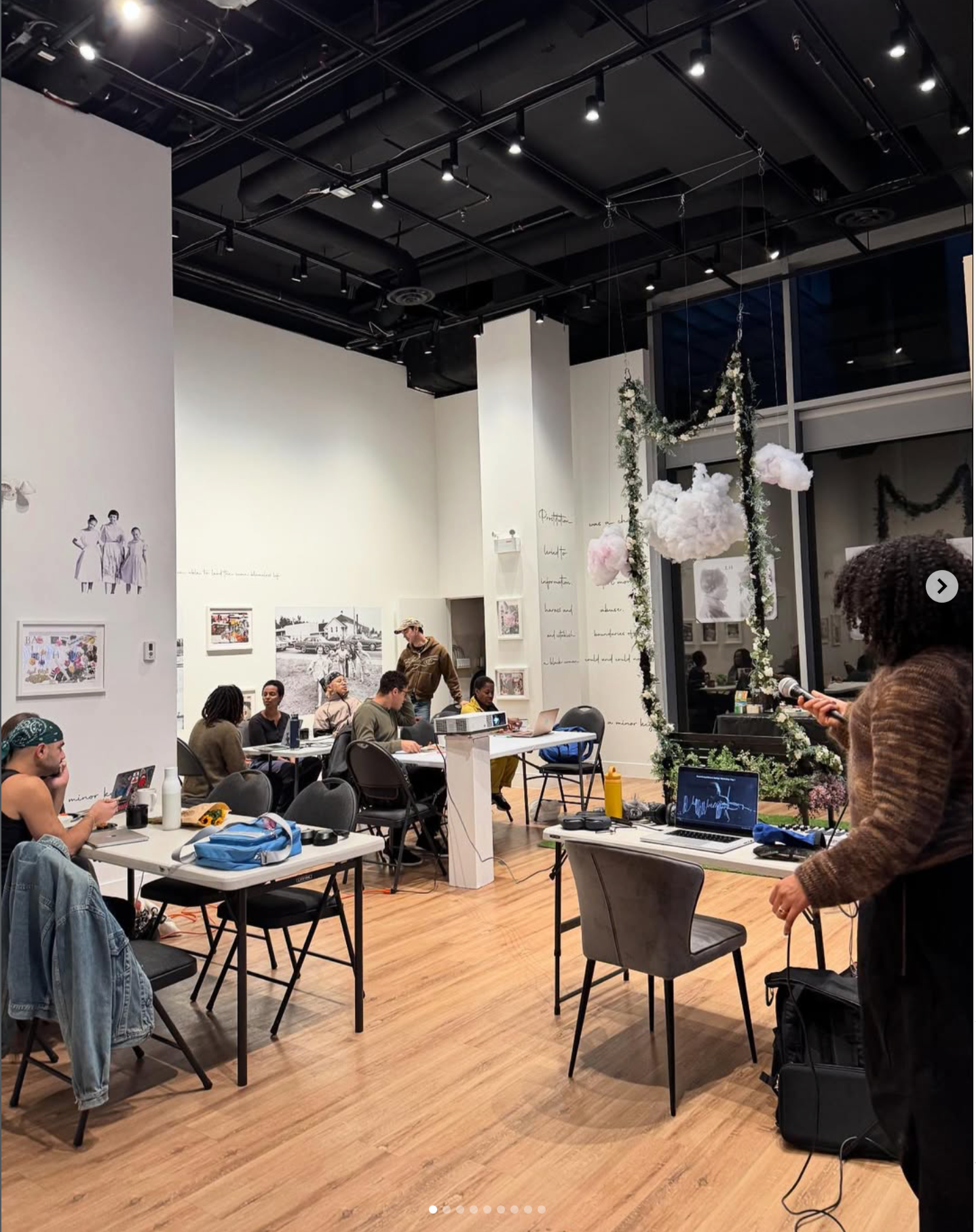
Images courtesy of The Black Arts Centre
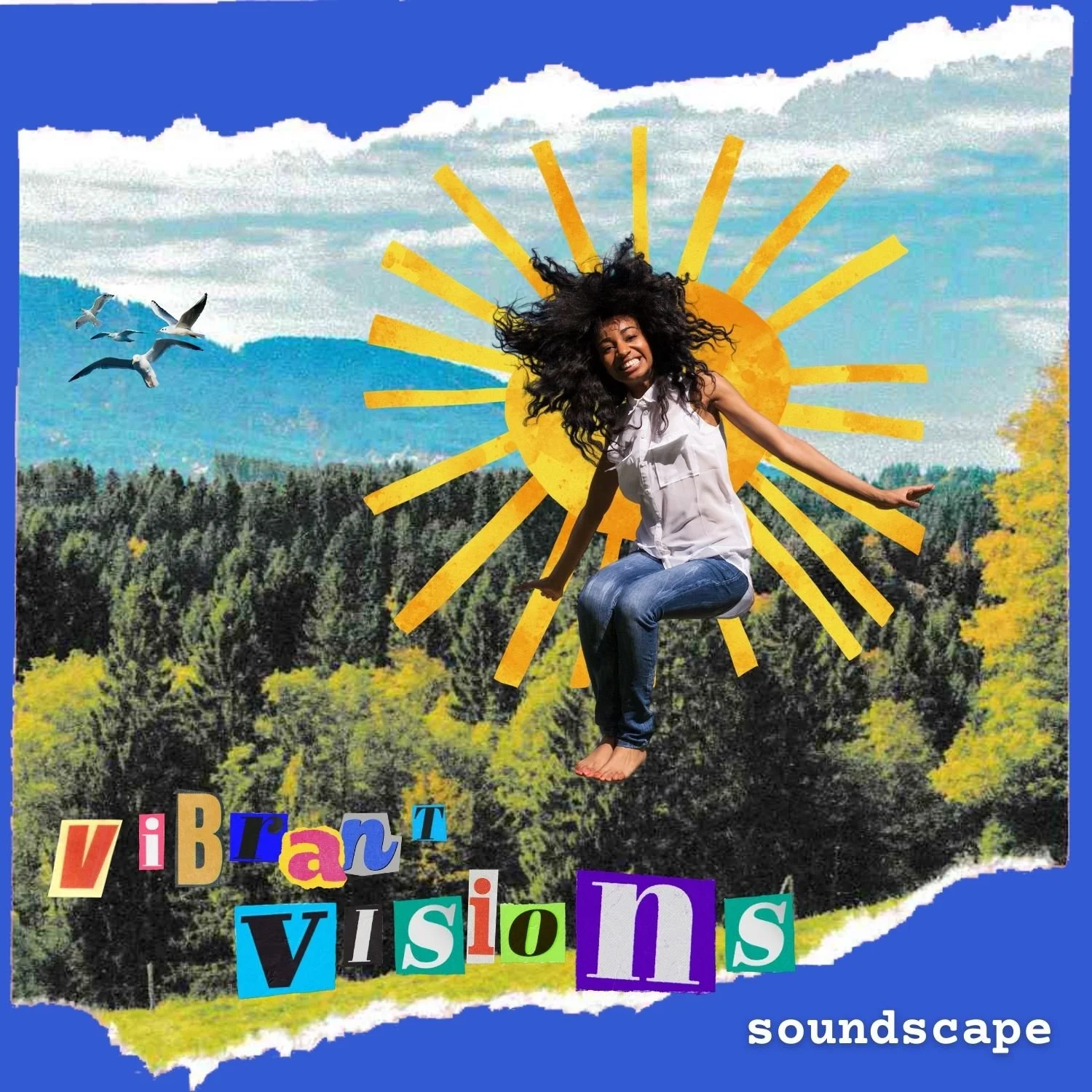
(Lulyana, Vancouver)
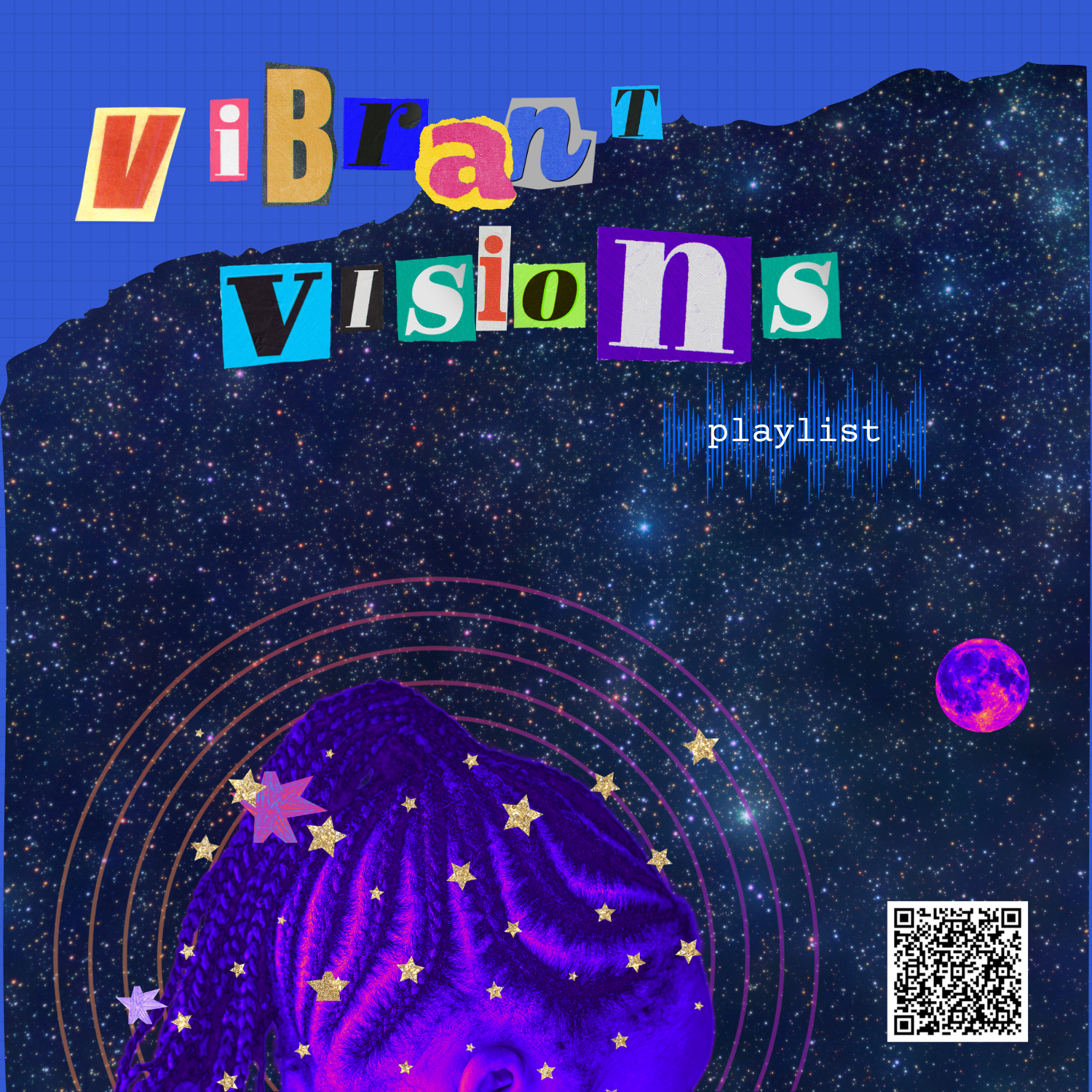
Explore the “Vibrant Visions” playlist, co-curated by the artists to showcase the many facets of Black girl experiences.
Experience an ambient soundscape inspired by themes from the Metro Vancouver workshops, where participants discussed how blackness in Canada is often stereotyped as “urban” and treated as out of place in natural settings.
I don't feel super patriotic and I think that a lot of times when people say Canadian, they think of like a white guy with a hockey stick. I think it's less of like belonging to Canada, more of like…This is the place where I live...[it] just happens to kinda be Canada, right?
(Paige, Vancouver)
Danya, 18 (Vancouver, 2024)
Jane, 16 (Vancouver, 2024)
Sarai, 16 (Toronto, 2023)
Lulyana, 17 (Vancouver, 2024)
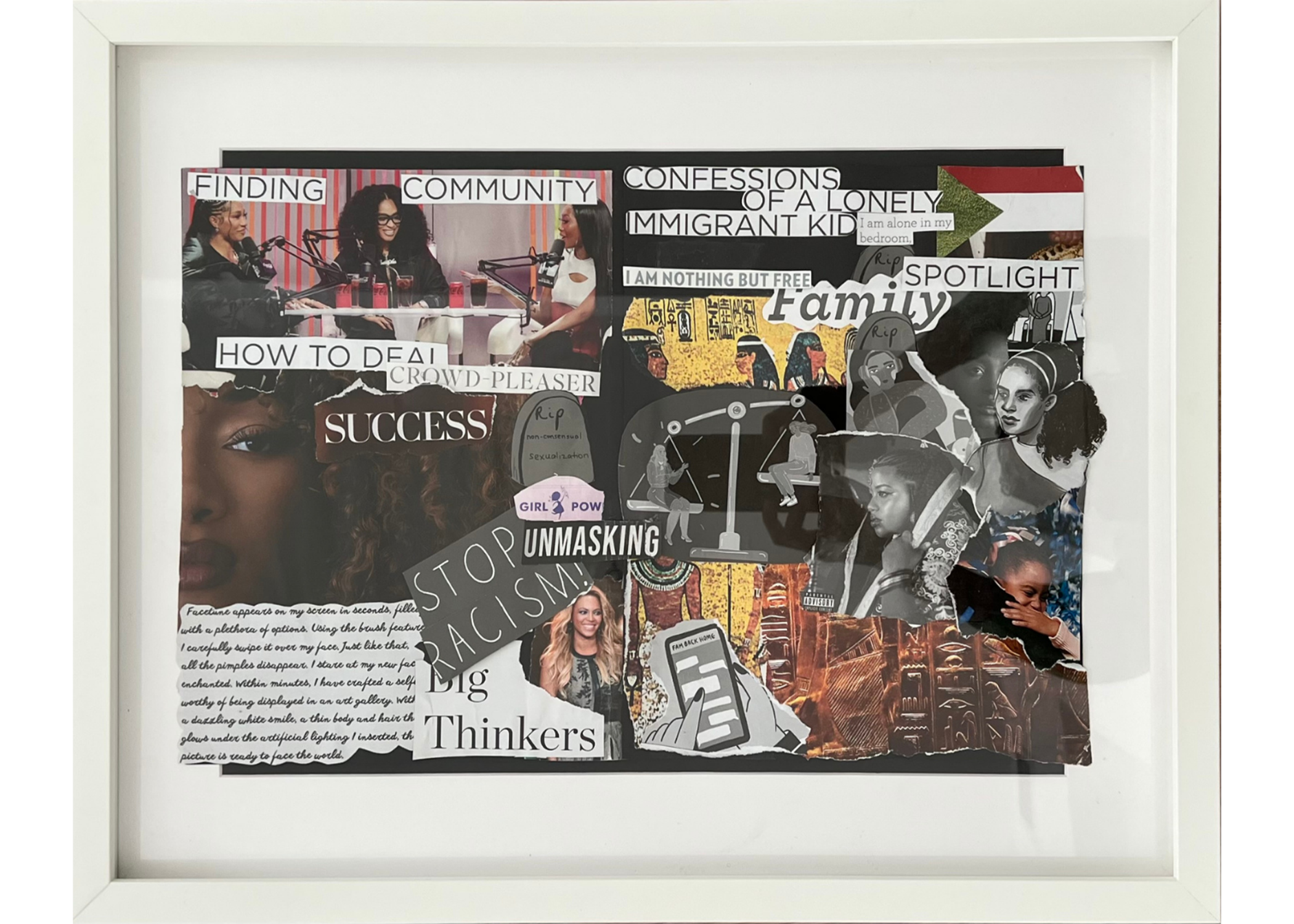
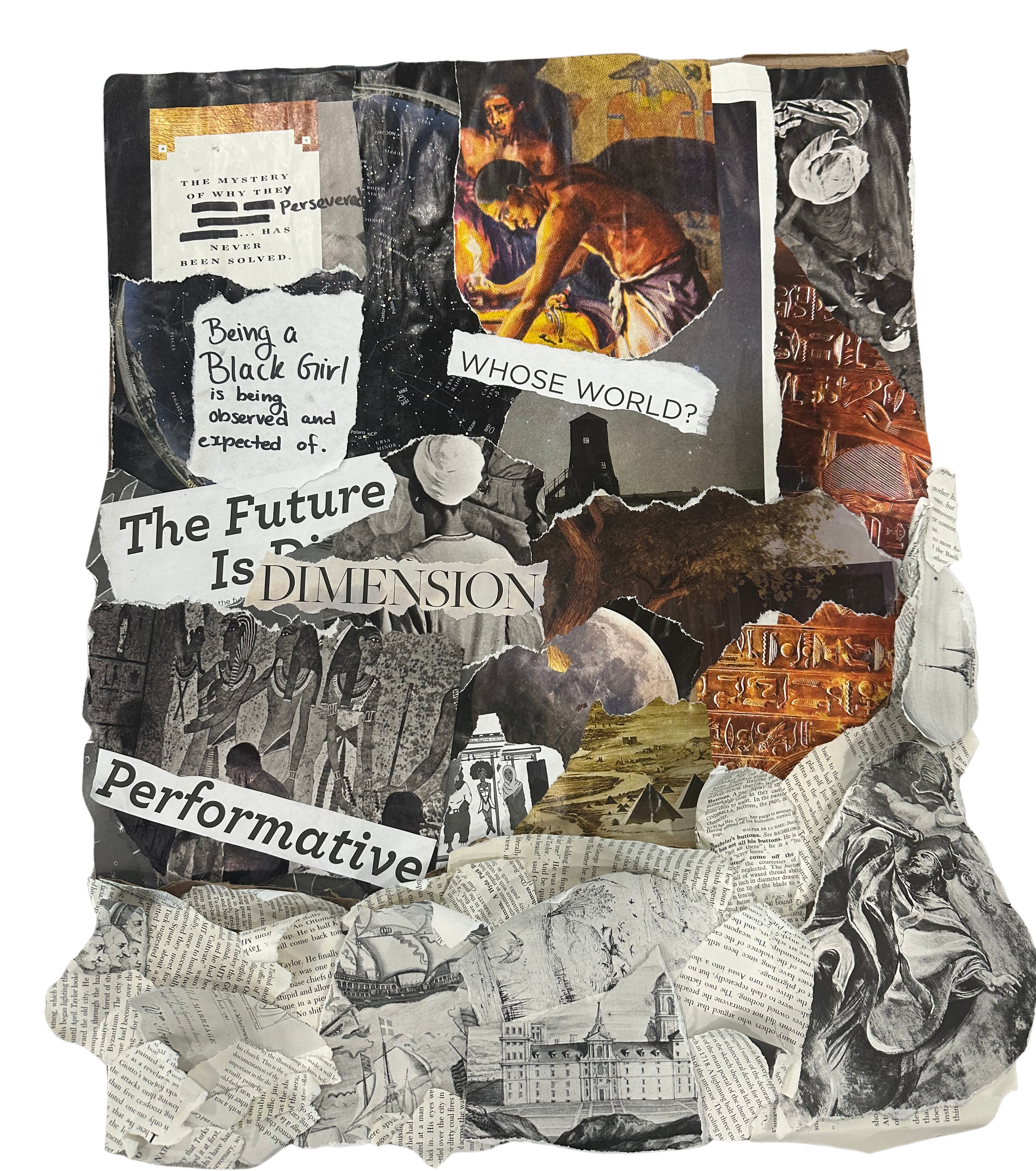
Being born and raised in Canada as a Black Sudanese woman has both obscured certain realities and broadened my perspective in unique ways. For a long time, I felt disconnected from understanding the world around me. I couldn’t grasp why my race held such importance to others or why it made them uncomfortable. Over the years, I noticed people often saw only my color, reducing me to their preconceived biases. My actions seemed scrutinized by non-Black people as if I represented my entire race. Many aspects of my identity made me feel like an outcast.
Living in Canada was a constant reminder that I was often the only Black person around. I became hyper-aware of my actions and words, constantly trying to make others less uncomfortable. It was incredibly draining to be expected to code-switch all the time. It wasn't until I left Canada in search of my self-identity that I began to love and embrace my melanin, my Sudanese heritage, my hair, and my skin. Suddenly, I wasn't the only Black person—I was just a person. This new environment allowed me to fall in love with my culture and religion, aspects I had long suppressed.
During my year abroad, I felt a mix of relief, happiness, freedom, and frustration. I was frustrated that I couldn't just be myself in Canada and angry that a country promoting itself as 'multicultural' rejected non-Eurocentric individuals and cultures. As a Black girl in Canada, I want others to know that I do not have to exceed expectations to meet white mediocrity. I am not the spokesperson for all knowledge on racism.
My collage captures this perfectly—the pressure to always be perfect, the need to suppress your true feelings and opinions, and the significance of Black friendships. It reflects the duality of my identity and the intersections within it. It represents my ‘Blackness’ in Canada.

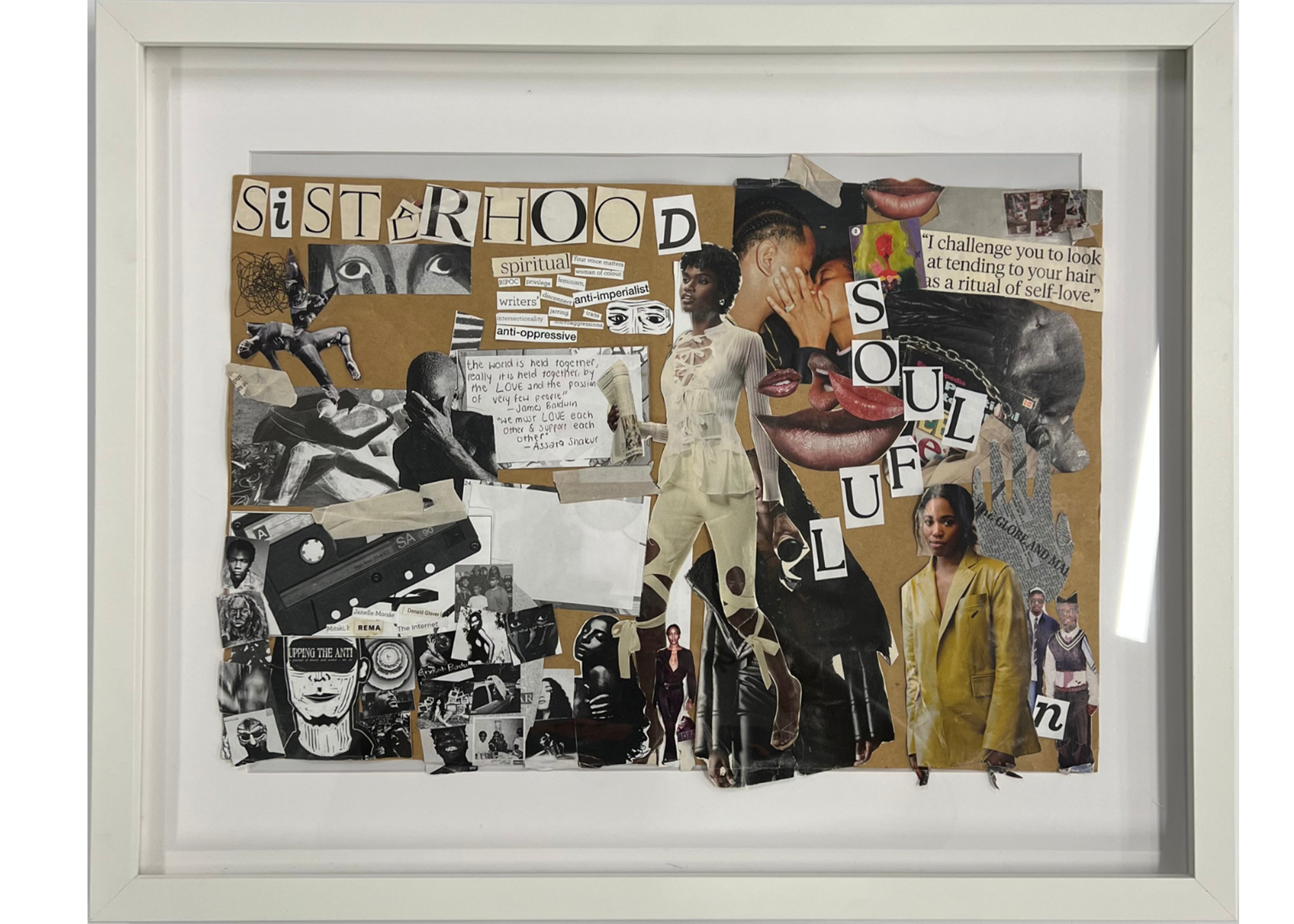
Being a Black girl in Canada means being perched at the intersection of two everpresent identities. That is, to be a girl and to be Black. There exists no pan-Canadian black experience as our individual experiences fine-tune how we perceive the world, but sisterhood in the context of Black girls in Canada supersedes our differences.
Being a black girl and residing in spaces as a visible minority, sometimes an outlier, means duality. Codeswitching, be it as it may, a harrowing experience for many Black girls, is an integral skill to possess when surviving in cities like the one I inhabit.
My blackness is molded, as soft putty is, by a skillful artist, by various developed hobbies, music being my largest one. From the soulful melodies of Songs In The Key of Life, to the vast soundscape of Beyoncé’s eponymous album, Beyoncé, the consumption and creation of music has captured the diversity of the Black experience from time immemorial.
Above all, to be a Black girl means possessing a love for people that transcends love itself. It means love for oneself and one’s community that you are willing to go past inconvenience, to go past what is easily accessible. That is what being a Black girl means to me. It is beauty, and it is sorrow. It is isolation, and it is community. It is a juxtaposed existence. It is everything; we are everything.
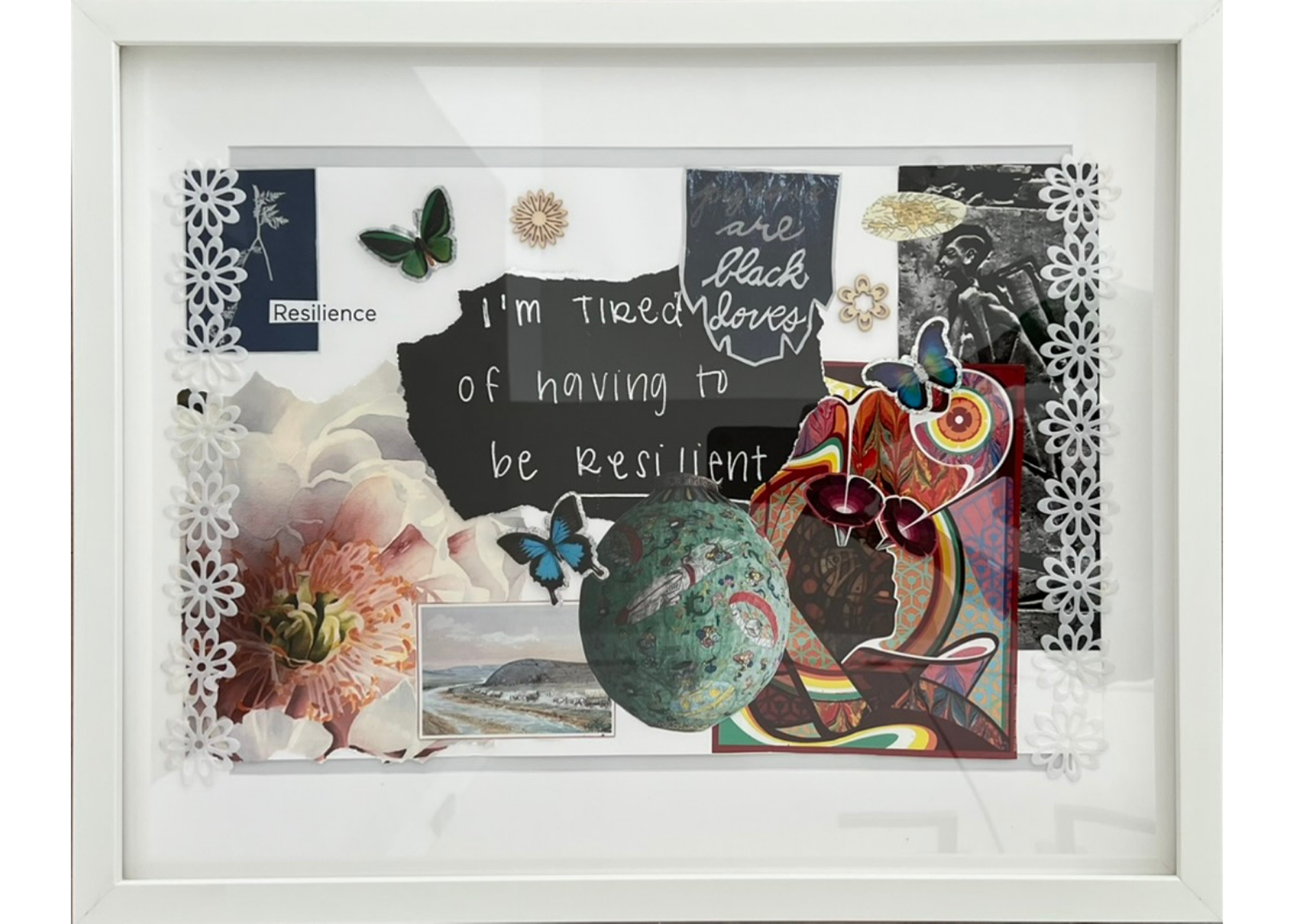
My collage focuses on two main themes: stereotypes and resilience. I’m sure that almost everyone on Earth has been stereotyped to some degree. This is especially true for Black girls. Since there are so many misconceptions people believe about Black girls, it isolates us and makes us feel “different” when the truth is we are not. We are just like any other race in the world, but stereotypes like “the angry black woman” or “black women are loud, rude and violent”, have made us feel as if we are “different” and less than. This is represented in the banner on the top right corner that says, “Pigeons are black doves”. Just because pigeons are a different colour and live different lives than doves, people have viewed them as dirty, while doves are viewed as a symbol of peace even though they are basically the same animal. Black women and girls have been living this exact story for centuries.
This ties in with the second theme of resilience. With everything Black girls have gone through throughout history, it’s only natural that we have developed resilience. But I believe because of this, people think that Black girls are so strong and they are able to withstand anything that is put against them. Again, this is simply not true.
Why do we always have to be the strong and resilient ones? Why is it taboo to see a Black girl being vulnerable? These questions are represented in the centerpiece of the collage and the accompanying details. The centerpiece says, “I’m tired of being resilient,” and all over the collage, there are things that are thought of as gentle and delicate, like flowers and butterflies. I did this to show that Black girls shouldn’t have to be resilient all the time and even though the world might look at us sideways because it’s not expected of us, we should learn to embrace the gentle, delicate nature that lives within all of us.
Serina, 17 (Vancouver, 2024)
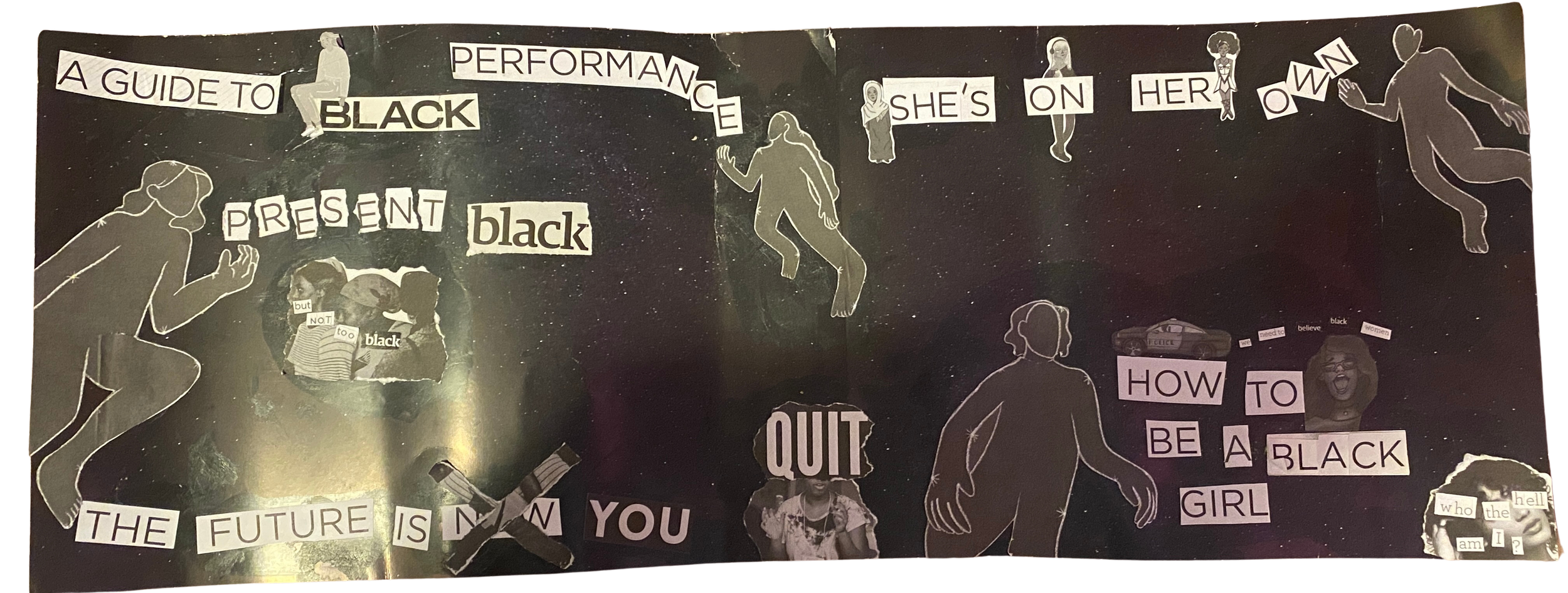
The collage “Extraterrestrial” is a showcase of the isolation and alienation faced by many black girls and black women. It focuses on the ways in which we are conditioned, segregated and perceived by the societies we grow up in. In the process of creating these collages, we were asked questions about belonging, girlhood, black womanhood and national/ personal identity to name a few. Through many rich discussions, I reflected on the ways I’ve felt growing up in a place that I don’t necessarily feel I belong. A place in which I am constantly told opposing ideas about my very own existence and identity as a black girl.
I used the theme of space because I believe it encompasses a lot of the sentiments I experienced in reflecting on my identity in this country quite well. It has felt to me as though I was brought into this place, this barren place with its own structures at play. Not necessarily a place that I belong and also not a place where I’m expected to succeed because it is inherently not my place to exist. Being told since childhood that you are lesser than, by your surroundings, while also being told by those who look like you that you are expected not only to succeed but to exceed expectations. It is a mess of confusion and pressure, and placing all of those mixed emotions in such a mysterious and unknown place as outer space made sense to me.
In the collage, we see elements of a very real and human experience; those of being silenced, of negative police encounters or of the impossibly high standards black women are held to. What we also see are these floating, almost ethereal entities that represent to me the mysticism as well as the beauty of blackness. It is a cacophony of beauty and pain and emotion. A cacophony of love and hate and confusion. It is the extraterrestrial experience of me as a black girl in Canada.

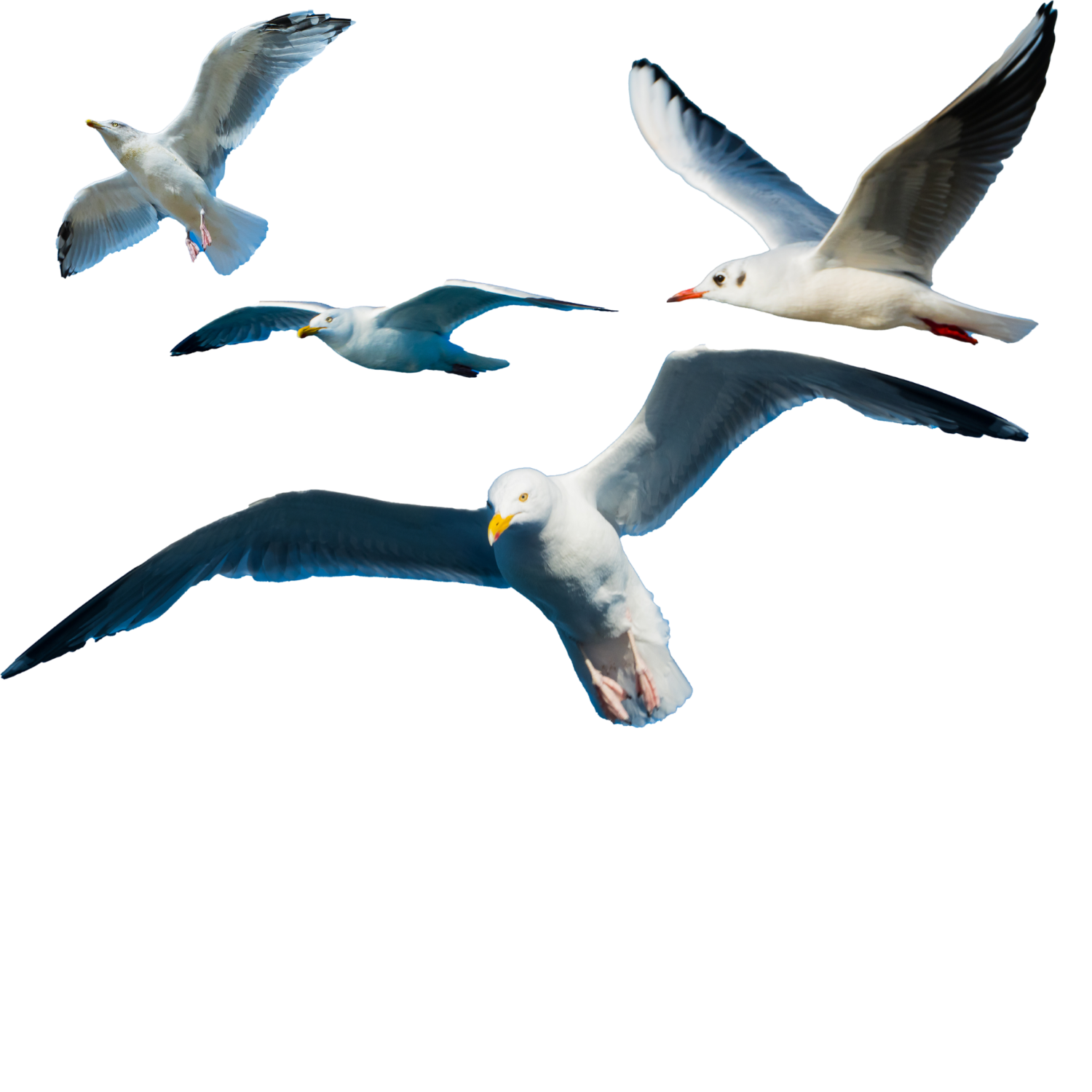
If I had to let others know one thing about what it's like to be a Black girl, I’d tell them it's the part of my identity this world sees first. I’ve often felt that because of this, it’s been positioned to be the shoulder that my achievements lean on. While questioning why I’m observed in a way that my peers never were, I came to the realization that I was expected to do one of two things; break stereotypes, or become them. The world didn’t want to hear me flow on the line of expressing black identity whilst excelling in predominantly white spaces. When I gained the appreciation of this success, I’d been “awarded” with an awe that held underlying tones of ‘despite being… (black) you did it’; a token I was. The words used were never “Black”, but rather how my ancestry originated across the Atlantic; how I utilized the opportunity of being here.
I’ve often questioned how my worldview would differ had I been born into one that didn’t discriminate. I wonder if the world would love me; in awe of the humanity I possess rather than the ones I comfort. As many Black women are seen as pillars of strength, such as Maya Angelou or Rosa Parks, I find myself quoting Tracy Chapman when asking to “...give me one reason to stay…” and let my shoulder take another tear. It’s no coincidence that the first adjective to describe Black women is strong. I am appreciated for a strength I hold out of necessity.
There are nights I look up and think about how my ancestors observed the same sky I see. How they did this when strength dwindled, looking for answers, much like I do now.
As being a Black girl in Canada has swallowed some of this, I use whatever is left to stay unphased by how invisible I feel.
The graceful perseverance comes with consuming my experiences so that they do not become me. If the bitterness of the world stole my nature they’d steal my achieved dexterity against it. The achievement that came without awe.